“Gopi silk” is a collection label on The Vedastra, not a fibre specification by itself. Before buying, verify the exact fibre composition, saree dimensions, blouse-piece details, care instructions and any origin or certification claim on the individual listing.
This distinction matters because a product name or photograph cannot prove that a fabric is natural silk. The Silk Mark Organisation of India, an initiative of the Central Silk Board, says it is difficult to identify silk by look and feel alone. Its Silk Mark label is used on products certified as 100% pure silk by authorised users.
What does “Gopi silk” mean?
On this store, Gopi Silk Sarees is the name of a shopping collection. The label helps group related designs, but it should not be read as a standard textile composition. The official Silk Mark FAQ lists Mulberry, Tasar, Eri and Muga among the main silks produced in India; it does not identify “Gopi silk” as a fibre category.
Use the collection name to browse, then treat each product page as the source for the item’s actual material and inclusions. If the listing does not state a fibre percentage or a recognised certification, ask the store before treating the saree as pure silk.
Read “Banarasi” and “zari” claims carefully
The Vedastra’s current Gopi silk collection includes sarees described with Banarasi and zari design terms. These words can refer to appearance, weaving details, origin or a protected regional product, depending on the evidence supplied for that item.
The Government of India’s Development Commissioner for Handlooms records Banaras Brocades and Sarees as a distinct tradition with features such as compact weaving, metallic visual effects, detailed figures, decorated borders and a broad ornamental pallu. The name also appears in the government’s list of registered handloom geographical indications. A similar visual style or a product title alone does not prove that a saree qualifies for that geographical indication.
Silk Mark also states that its label confirms silk fibre, not the purity or quality of zari. Check fabric composition and zari details separately.

How to compare fabric labels
1. Look for an exact composition
Prefer a listing that names the fibre and, for a blend, gives percentages. “Silk look”, “art silk”, “silk blend” and “pure silk” are not interchangeable. If a composition is absent, request it before ordering.
2. Separate fibre, weave and finish
Fibre tells you what the cloth is made from. Weave describes how yarns are constructed. Finish and zari describe visible or decorative elements. A metallic-looking motif does not establish the metal content, and a smooth sheen does not establish pure silk.
3. Check certification only when it is shown
If a seller claims Silk Mark certification, look for the numbered hologram or label and retain the invoice. Do not assume certification from the product name.
Sizing: the measurements that matter
A saree should not be treated as “one size” without checking practical measurements. Review the saree length and width, whether it is pre-stitched or unstitched, and whether a blouse piece is included. If included, check the blouse-piece length and whether it arrives unstitched.
The two live products reviewed for this guide describe matching blouse pieces, but their pages do not currently show verified saree or blouse-piece dimensions. If those measurements affect your drape or tailoring plan, ask for them before checkout.
Allow for the drape style you plan to wear, the number of pleats, your footwear and any tailoring time. A product photograph can help compare colour and motif placement, but it cannot replace measurements.
Compare two current designs
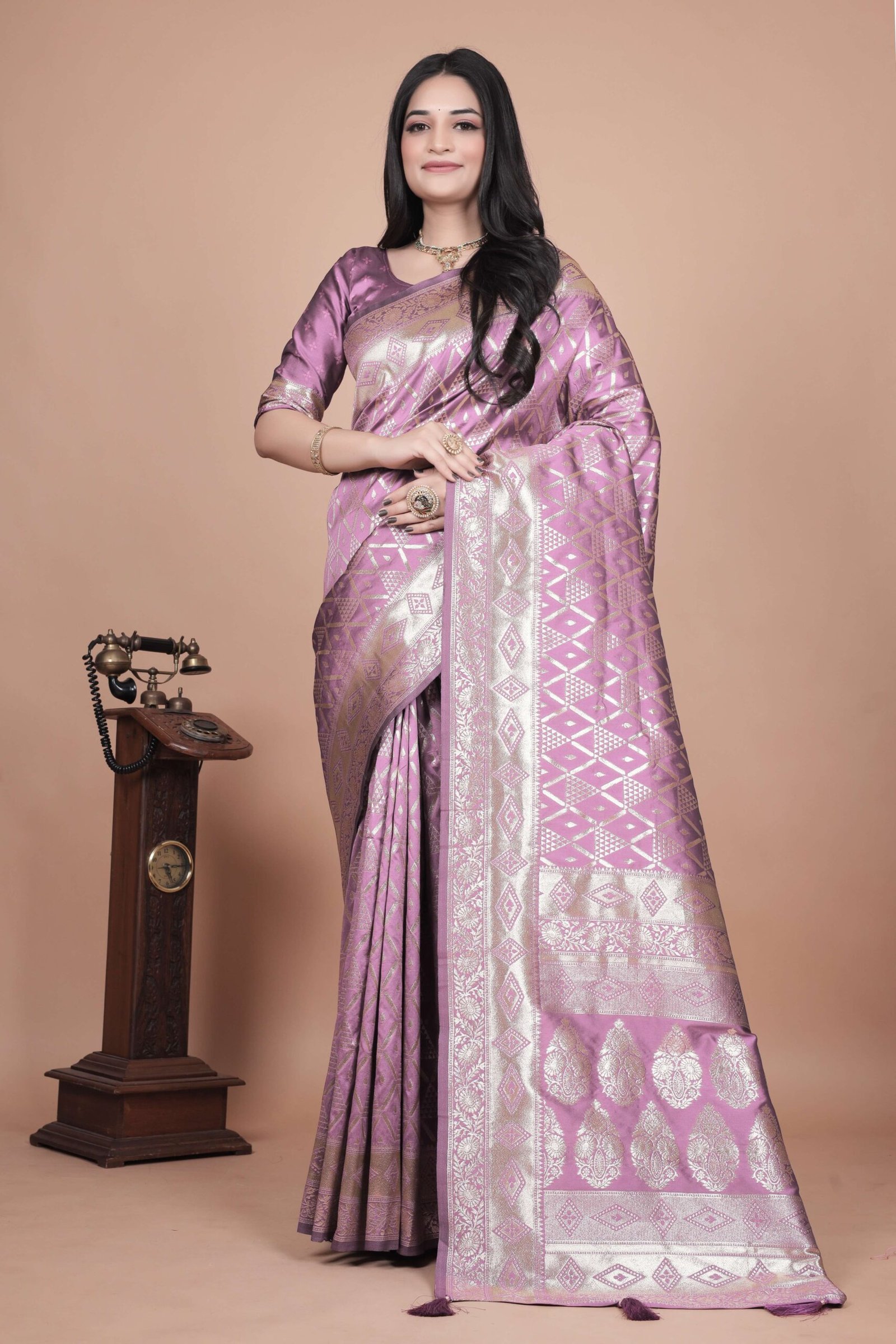
Browse the full Gopi Silk Sarees collection, then compare individual listings. The lavender saree with silver-colour zari motifs shows a geometric body pattern and floral pallu in its product photographs. The emerald green saree with silver-colour zari detailing offers a darker base colour with a different geometric arrangement.
Use the galleries to compare the body, border and pallu rather than choosing from the first image alone. Confirm the current stock status, listed material, included pieces and care directions on the exact product page before paying.
Care guidance without guessing the fibre
Follow the sewn-in care label and the product-specific instructions first. For verified pure silk, the Silk Mark care guide recommends dry cleaning for the first three washes. If hand washing is permitted, it advises lukewarm water with neutral soap, gentle handling without wringing, flat drying in shade, and low-to-medium ironing on the reverse.
Do not apply pure-silk care automatically to a blend or synthetic fabric. Store the saree clean and dry, avoid pressure on raised zari work, and ask for product-specific guidance if the listing is unclear.
Questions to ask before buying
Is Gopi silk a recognised silk fibre?
Not in the official Silk Mark list reviewed for this guide. On The Vedastra it is a collection name. Verify the composition of each saree separately.
Can a photograph confirm pure silk?
No. Silk Mark says look and feel are not reliable enough to identify silk. Ask for a precise composition and certification evidence when purity matters.
Does a Silk Mark label certify zari?
No. Silk Mark’s FAQ says the label assures silk purity, not the purity or quality of zari.
What dimensions should I confirm?
Ask for saree length and width, blouse-piece inclusion and length, and whether any part is pre-stitched. Compare those answers with your preferred drape and tailoring needs.
What else should I check before checkout?
Review the exact material claim, colour and motif photographs, included pieces, care instructions, shipping estimate and return conditions. Contact the store when a required fact is missing.
Textile background checked against the Silk Mark Organisation of India and the Government of India’s Development Commissioner for Handlooms. Product details checked against The Vedastra’s live catalogue on 6 October 2026.